Tampilkan postingan dengan label attention. Tampilkan semua postingan

In the flow

This is number 6 in my blog series on major learning theories. My plan is to work through the alphabet of psychologists and provide a brief overview of their theories, and how each can be applied in education. In the last post we examined the work of Craik and Lockhart on Levels of Processing theory. In this post, we explore the work of Mihály Csíkszentmihályi on Flow Theory. This is a simplified interpretation of the theory, so if you wish to learn more, please refer to the original work of the theorist.

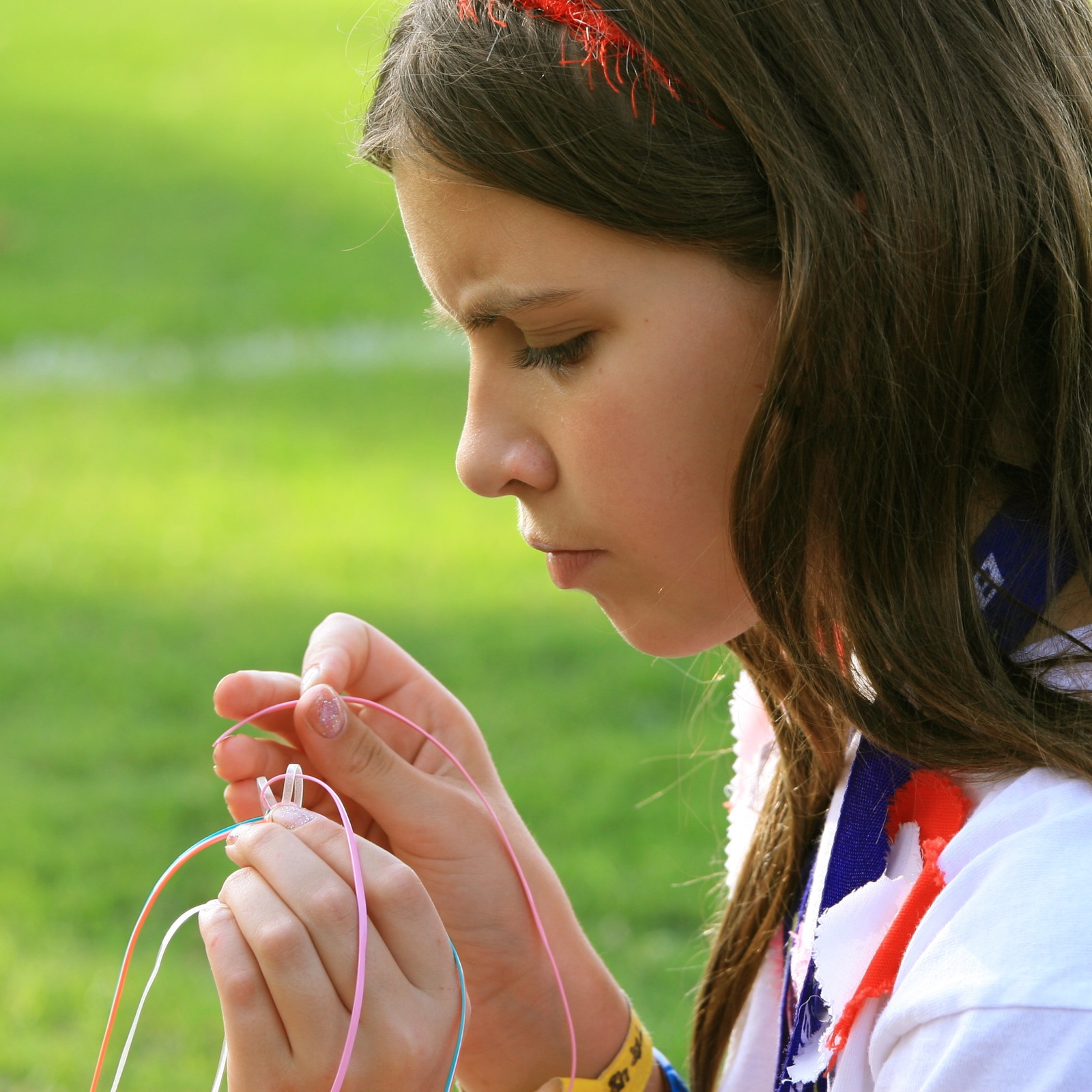
There is an interesting news report on the BBC News website this morning. It is a piece claiming that children who use technology at home are finding that they are not able to concentrate in school. They are not able to focus, claims the report, because 'they're spending so much time on digital games or social media.' Yeah right. It's easy to blame lack of concentration on technology, but what about the quality of the lessons they are attending? The onus is on teachers to make lessons more interesting, and that is what they are trained to do. Part of the solution might be to incorporate these digital games and social media into some of the lessons. Just how can we engage students more effectively? Here's Flow Theory:

The theory

You know that moment when you are in the zone, on the ball, completely focused? You become so absorbed by what you are doing that your forget what the time is, you forget to eat, you miss sleep. That's essentially what flow is. According to Mihály Csíkszentmihályi, being in the flow is the ultimate in focused intrinsic motivation. In simplistic terms, being in the flow is where students find themselves in that narrow channel between disinterest and fear. There is a fine balance between the challenge of the task, and the skills the learner has at their disposal. Maintaining this balance avoids disillusionment if your skills don't measure up to the challenge, or boredom if the task is too simple and easy to achieve.

How it can be applied in education

Learners who are immersed in their studies tend to be single-mindedly motivated to explore their topic. Getting them to the place where they fall so in love with learning that little else matters is another matter entirely. One of the ways teachers can help students to focus more on their studies is to make learning so irresistible that there is seems to be no other option. Games and gamification may offer students the fine equilibrium between boredom and anxiety, as will other forms of immersive learning such as role play, simulation and problem solving. As long as the learning resource is designed to have the appropriate levels of challenge built into it, students will be interested. The graphic illustrates this clearly. P2 and P3 are positions that should be traversed quickly if students are to remain in the flow.

To be successful, challenge based learning requires achievable goals that require some incremental development of skills beyond the average, and where the challenge rises commensurately to match those skills (student progresses from P1 to P4). If the subject matter is made interesting and enjoyable enough, teachers won't have to work too hard to encourage students to actively engage. They will do so naturally, because they will want to rise to the challenge, and succeed because they see no other possible outcome.

Reference

Csíkszentmihályi, M. (1990) Flow: The psychology of optimal experience. London: Harper and Row.

Previous posts in this series:

Anderson ACT-R Cognitive Architecture
Argyris Double Loop Learning
Bandura Social Learning Theory
Bruner Scaffolding Theory
Craik and Lockhart Levels of Processing

Photo by Randy on Wikimedia Commons
Graphic by Steve Wheeler

Creative Commons License
In the flow by Steve Wheeler is licensed under a Creative Commons Attribution-NonCommercial-ShareAlike 3.0 Unported License.

Watch and learn

This is the third in my blog series on major learning theories. My plan is to work through the alphabet of psychologists and provide a brief overview of their theories, and how each can be applied in education. Yesterday we examined the work of Chris Argyris on double loop learning. Today, we explore the work of Albert Bandura on social learning theory.

It's been said that Albert Bandura's theory of social learning spans the gap between behaviourism and cognitivism. Social learning theory incorporates the idea of behaviour reinforcement from the former, and cognitive processes such as attention, motivation and memory from the latter. In fact, Social Learning theory is essentially - as the name suggests - an explanation of how we learn when we are in social contexts.

The theory

It was Albert Bandura's intention to explain how children learn in social environments by observing and then imitating the behaviour of others. In essence, be believed that learning could not be fully explained simply through reinforcement, but that the presence of others was also an influence. He noticed that the consequences of an observed behaviour often determined whether or not children adopted the behaviour themselves. Through a series of experiments, he watched children as they observed adults attacking Bobo Dolls. When hit, the dolls fell over and then bounced back up again. Then children were then let loose, and imitated the aggressive behaviour of the adults. However, when they observed adults acting aggressively and then being punished, Bandura noted that the children were less willing to imitate the aggressive behaviour themselves.

From his research Bandura formulated four principles of social learning. These were:
1. Attention. We cannot learn if we are not focused on the task. If we see something as being novel or different in some way, we are more likely to make it the focus of their attention. Social contexts help to reinforce these perceptions.
2. Retention. We learn by internalising information in our memories. We recall that information later when we are required to respond to a situation that is similar the situation within which we first learnt the information.
3. Reproduction. We reproduce previously learnt information (behaviour, skills, knowledge) when required. However, practice through mental and physical rehearsal often improves our responses.
4. Motivation. We need to be motivated to do anything. Often that motivation originates from our observation of someone else being rewarded or punished for something they have done or said. This usually motivates us later to do, or avoid doing, the same thing.

How it can be applied to education

Social modelling is a very powerful method of education. If children see positive consequences from a particular type of behaviour, they are more likely to repeat that behaviour themselves. Conversely, if negative consequences are the result, they are less likely to perform that behaviour. Novel and unique contexts often capture students' attention, and can stand out in the memory. Students are more motivated to pay attention if they see others around them also paying attention. Another less obvious application of this theory is to encourage students to develop their individual self efficacy through confidence building and constructive feedback, a concept that is rooted in social learning theory.

Reference

Bandura, A. (1977) Social Learning Theory. New York: General Learning Press.

Photo by MikePD

Creative Commons License
Watch and learn by Steve Wheeler is licensed under a Creative Commons Attribution-NonCommercial-ShareAlike 3.0 Unported License.