Curious learning

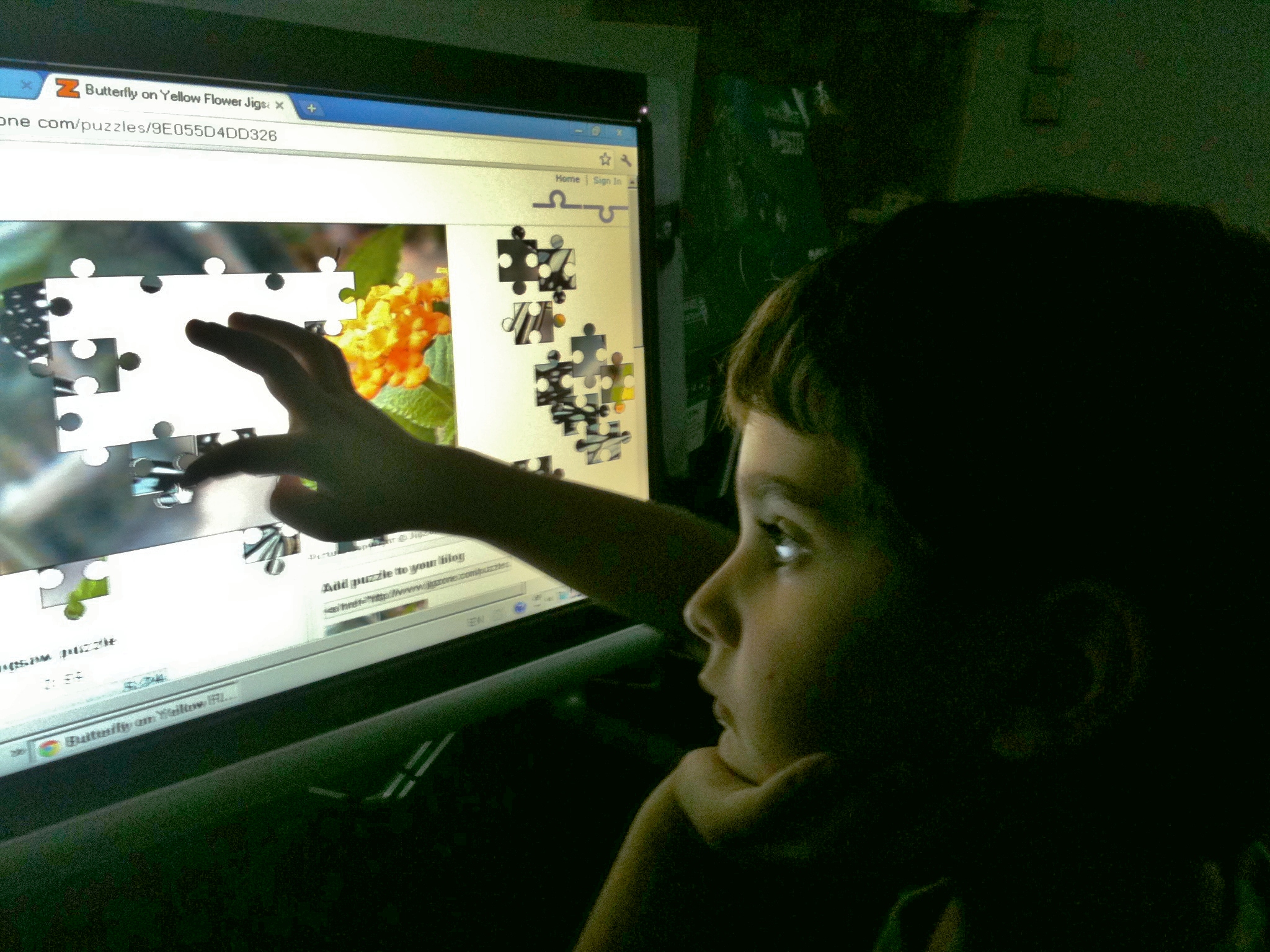
Curiosity killed the cat, but it also made each of us who we are today. Without curiosity, none of us would learn very much at all. Learning is based more on curiosity than any other human characteristic. Children who are curious are always interested in discovering more. Children who lose their curiosity usually turn off and tune out. Children are naturally curious, but sadly, rigid school systems and curricula have often knocked this out of them by the time they graduate.

My wife Dawn, who is a teacher in a secondary school, told me this morning that the school inspectors are always demanding evidence that children progress rapidly. She went on to add that children will only progress rapidly if they are fully engaged in their learning, and that engagement can only happen if they are really interested in the subject they are learning. She's right. All educators instinctively know that children who are engaged, are children who achieve. Having a passion for your subject is always a good thing for an educator, and it has an impact on students. But sometimes it is not enough. Other means are necessary to promote curiosity.

The trick is not to rely on new technology. That doesn't necessarily impress younger students. The solution for engaging children and sustaining their curiosity is to engineer situations where they will be challenged, surprised and yes - kept in a constant state of suspense. Sometimes it is as simple as changing the format of a lesson, or altering the layout of a classroom. Sometimes it is to introduce a new approach or problem where students need to take an alternative role. I often create chaos and uncertainty in my lessons. People are not comfortable with this, and will do anything to resolve it into something meaningful. The answer is always, always keep them guessing - and then send them out confused, if you have to.

Sometimes technology can be used to support this process of maintaining curiosity. Giving students a problem to solve is one thing. Embedding the problem into a larger project where they need to rely on each other (collaborative), and their resources (content) and their own intuition and personal qualities (creativity) to achieve their goals. The process is equally important - what they do to get to their goal should require some stamina and fortitude, and it shouldn't come easy. Some of the best learning projects I have seen have been wide ranging, open to multiple interpretations, complex and problematic, and have involved technology of some kind to support the process.

We need to engage our learners. They will only be engaged fully if they can actively participate in their learning. They won't learn if they are not curious. The responsibility for this lies with the educator. Go figure.

Photo by Steve Wheeler

Creative Commons License
Curious learning by Steve Wheeler is licensed under a Creative Commons Attribution-NonCommercial-ShareAlike 3.0 Unported License.

What makes an inspirational teacher?

I had the honour to be presented with an award for 'most innovative use of teaching methods' at the recent Plymouth University student union SSTAR Awards. The evening was a joyous celebration of teaching excellence, and most importantly, all the award nominees and winners were chosen by the university students. For me and other members of teaching staff, this made the event more meaningful. The programme for the event details all of the categories, but what strikes readers the most is the emphasis that is placed on the relationships and respect that exist between the tutors and their students. But how does someone develop their skills to become an excellent teacher? Let's start with being inspirational.

In their nomination statements, Plymouth University students revealed what they thought were the secrets of becoming an inspirational teacher. By far the most important trait they identified was enthusiasm and passion for the subject. Almost a third of those who voted said they were inspired by those lecturers who were genuinely excited about their subject. One student said about their lecturer: 'He excitedly cites relevant material from memory, rousing students' interest and maintaining their attention as if it were vital to their existence - and sometimes, I am convinced of it.' Another stated: 'His inspirational teaching and enthusiasm for the subject is overwhelming. His lessons are delivered with such passion that you cannot help but leave inspired and with a thirst to learn more.'

Learning is not an easy business, so inspiring students to actually want to learn more is quite a feat. Sometimes studying can be tedious, arduous and can even sap the motivation right out of students. Inspirational teachers intervene at the right point, and know instinctively how to change the emphasis and direction of learning, bringing students back on to track by motivating them to succeed. Many times in my teaching career I have seen the need to sit down with a student and encourage them back in to line, and not to give up. Plymouth students also identified many other facets of inspirational teaching they thought important, including the art of giving good feedback that is constructive and forward looking, offering help outside of the formal lecture and seminar context, giving first rate support and advice, and using a variety of innovative and captivating teaching methods. The SSTAR annual awards not only identifies excellent teaching, but also encourages all of us here in Plymouth to strive to be better, and more inspirational as educators.

Photo by Steve Wheeler

Creative Commons License
What makes an inspirational teacher? by Steve Wheeler is licensed under a Creative Commons Attribution-NonCommercial-ShareAlike 3.0 Unported License.

Who wants to live forever?

I'm often invited to speak about the future. Normally the invitation is for me to discuss what we can expect in the world of education and learning, and my presentations usually cover new and emerging technologies, new pedagogical theories, and a range of ideas about what future classrooms (if there are going to be any) might look like. There is also a range of ideas about changing roles of teachers and learners, and some speculation about what new technologies we might expect to see in the future. I very rarely tread onto very dangerous ground though. This is the speculative and controversial area of future humans.

Several terms can be used to describe our future as humans. Recently I wrote an article entitled Human 2.0, but the title is probably inadequate to describe the incredible and far reaching changes we might witness. I also wrote about the controversial potential of the impact of genetic, robotic, artificial intelligence and nanotechnology sciences on our future in GRIN and bear it. Another expression sometimes heard is 'post-human', but this sounds a little lurid and sensational, as though we have entered into a new phase in human evolution. Cyborg is a name given to those who are both cybernetic and organic by nature or design. The lines are blurred between how much technology we would need to integrate into and around/on our bodies before we actually begin to lose our humanity.

As Martin Rees, Astronomer Royal, claimed at a conference in 2013:

'Post-humans will evolve from our species not via natural selection but by design.  They could be silicon-based, or they could be organic creatures who had won the battle with death'

Whether or not this statement will ever be realised, we will need to wait and see. What we do need to ask though, is do we actually want a future like this? Do we really wish to subsume our humanity and immerse our identities under a sea of technology? Do we truly want to live forever? Am I alone in thinking that whatever name we decide to call our future collective state, and no matter how technologically advanced or integrated we choose to become with our technologies - we will, and must - always maintain an essence of our humanity.  Very few of us will really wish to live forever. Physically and biologically it is impossible to do so. Metaphorically, and with a stretch of our imagination, it may be possible. There are theories that we can live on (or at least our memories can live on) within the vast digital acreage of the cloud. This is already possible, because whatever we create and share via the cloud, is indeed preserved for future use by ourselves and others. But this is not our true essence, our consciousness, our real selves. It is merely a representation of each of us. It is merely another version, albeit more accessible and malleable, of the diaries, books, films, music, photographs, paintings and sculptures previous generations have left behind for us to experience. As the dying android in the movie Bladerunner says:

'I've... seen things you people wouldn't believe... Attack ships on fire off the shoulder of Orion. I watched c-beams glitter in the dark near the Tannhäuser Gate. All those... moments... will be lost in time, like .... tears... in... rain. Time... to die...'

To truly 'live forever', computers would need to capture our humanity, the true essence of who we are. And since it is impossible for any of us to conclusively define who we are, how can we ever expect a computer to work it out? Our ideas may truly be in the clouds, but our heads certainly aren't and we are still a very long way off from being 'post-human'.

As ever, your views are welcomed.

Single frame from the movie Bladerunner via Wikimedia Commons

Creative Commons License
Who wants to live forever? by Steve Wheeler is licensed under a Creative Commons Attribution-NonCommercial-ShareAlike 3.0 Unported License.

Who we are

Who are you? How do you let other people know who you are? Are you the same person online as you are in real life? Can you separate your professional identity from your personal identity?

These important questions have been raised several times in the last few weeks at events I have attended. The concept of identity (personal and professional) is a complex one. There always seems to be a discussion about questions around identity on popular social media channels. Twitter can be a particularly powerful forum for such dialogue, as it proved once again today.  I tweeted several questions around this discussion and report some of the responses and conversations here.

Firstly, I asked if professional identity can be separated from personal identity. One response was from David Hopkins at Leicester University who thought it was possible, but said: 'adding a personal touch, you become a personality where background and experience can enhance professional impact' - so perhaps it may be useful if the 'two identities' can inform each other. Guido Gautsch, a teacher in Melbourne agreed, but argued that it was probably not possible to separate them on open social media platforms such as Twitter. Jon Kruithof over at McMaster University also concurred, but with the caveat that it depends on what you share and the groups you share with. 'The more you share, the less likely you will keep them separated' he remarked, invoking the idea of PLNs (personal learning networks). At Reading University, Pat Parslow thought that separation had to occur, and saw a social dimension, asking whether PLNs were 'built, uncovered, grown or nurtured?' I suggested that it was all four, depending on who we are and what weight we place on our PLNs. Many professionals manage two separate accounts to try to differentiate between their professional and personal or less formal personae. Some such as Jane Davis said they thought it was a good idea to do this to maintain salience and focus on context specific roles, but others such as Martin King saw problems suggesting that 'just as identity is complex, so is trying to divide it'.

Secondly, the common consensus is that personal identity is a more or less constant concept, but that elements of it can change depending on context. So 'we are who we are', each of us unique individuals, but it seems that context and other variables can change it at least temporarily, creating a kind of fluid identity that switches between contexts. This is very much aligned to Erving Goffman's drama model in which he suggested that we adopt front stage and back stage roles depending on where we find ourselves located across the formal-informal spectrum of our daily activities. This continuum of identities was an idea that UK radiotherapy lecturer David Eddy also argued for.

Identity in online environments tends to be even more difficult to express for some. When asked how online identity might be defined, Aaron Davis, a teacher in Melbourne said his identity was 'complicated, contradictory and complex. Ever evolving, yet also staying the same.'  An interesting response came from Rev Sally Jones, a priest in the UK who said that it was 'me, but 10% better', to which I asked whether she found some added value through the affordances of the tool she used. She replied that she used social media for work and it gave her the chance to 'think things through properly before acting'. It is often this kind of 'reflection time' that prevents us from saying what we think immediately, and enables us to better represent ourselves and our ideas in a more considered way. This could be seen as a kind of identity regulation through asynchronous filtering.

Jose Picardo, an assistant principal at a school in England said that his identity was 'managed, if I don't manage it someone else will' acknowledging the potential of outside social influences to impact negatively upon one's online identity and reputation. Finally, Helen Blunden, another teacher from Melbourne revealed how complex she thought her online identity could be when she said it was 'Same but different". Online, mindful but more expressive; cautious but also creative; guarded yet open and sharing. Confused.

There were several other responses more or less saying similar things to those above, and I would like to thank all those who took part in this speed chat on Twitter. Identity is a very complex issue, compounded by the fact that we are increasingly projecting ourselves over the Web through social media. It's a discussion that will no doubt continue for a long time. What are your views?

Photo by Adrian Clark

Creative Commons License
Who we are by Steve Wheeler is licensed under a Creative Commons Attribution-NonCommercial-ShareAlike 3.0 Unported License.

Changing the learning landscape

Changing the learning landscape is a one day workshop on social media and learning in higher education that will be held at the University of Warwick on April 24. It's funded by the Higher Education Academy and the strap line for the event is interesting, intending to cover the 'realities of social media in learning and teaching: Making effective, safe, efficient and appropriate use of social media'. Clearly this is an important area of development for all education professionals, in whatever sector they work. Digital literacies (human attributes) and technology must work in tandem if we are to ensure the safe, appropriate and effective use of any social media tool. I'm looking forward to participating, and hope to learn much, because the blurb from the flyer promises much:

Social media turns the traditional static web into a participatory and collaborative experience. Social media enables individuals to discuss, share, and learn via different kinds of media, such as text, video, photos. The use of social media is increasing within higher education to teach and support student learning. The range of different social media platforms is ever expanding and it can seem quite daunting trying to navigate through this and find effective methods for learning and teaching. This workshop will discuss a range of social media platforms and provide examples of their use within learning and teaching.

This workshop will offer focussed support for strategic innovation and institutional change in the use of technology to enhance the student experience within learning and teaching. With examples of practice coming from a range of disciplines this event will look to inspire leadership of pedagogic development of the use of social media platforms. Through a series of presentations, activities and discussions, led by expert speakers, this one-day workshop will introduce you to social media approaches within learning and teaching and provide opportunities to explore how such techniques could be used in your own practice.

I have the privilege of being the first speaker for this event, and my topic is: 'Social Media and Learning: Content is a Tyrant, Context is King.' Here's the abstract:

"Social media is a fertile terrain for networked learning, and has many popular facets, but there are also issues and challenges. 'Content is king' was an aphorism that Bill Gates used to describe the capability of the web to deliver knowledge in a democratic and open manner. Now, however, with exponential increases in activity and a massive upsurge of user numbers, social media of all kinds are being used to generate content. Such user generated content can be found on YouTube (over 70 hours uploaded every minute) and Vimeo, images on Flickr, Facebook and Snapchat, and other content on a myriad of blogs, wikis and other content sharing platforms. What are we to make of all this content, and how can we make sense of, and filter it? Content is no longer king, it is now a tyrant, and for many is unmanageable. A new generation of social media tools is emerging to help us cope with this tsunami of content. Social tagging and bookmarking, aggregation and curation tools allow for content to be filtered, managed and for value and context to be added. In this session we will explore some of these tools and discuss their place in a time when higher education is having to adapt very quickly to the rapid advances technology is making."

The Twitter hashtag to follow will be #CLL1314

Photo by Genial 23

Creative Commons License
Changing the learning landscape by Steve Wheeler is licensed under a Creative Commons Attribution-NonCommercial-ShareAlike 3.0 Unported License.

From atoms to bits

One of the first books I ever read about digital media was Nicholas Negroponte's Being Digital. I have a first edition, published in 1995, and I was honoured to have dinner with Nic last year, where he duly signed my copy. Negroponte has been influential with many projects such as MIT Media Lab, Wired Magazine and the One Laptop Per Child initiative bearing his name. One of the things that most struck me about Being Digital, was the distinction Nic made between atoms and bits. The atom represents physical space, content, objects, while the bit represents the digital, virtual world. Atoms have to be shipped and handled which takes time, and they take up physical space. Bits by contrast, in Nic's own words: 'have no colour, size or weight, and can travel at the speed of light.' What a difference bits have made in the last few decades! They have changed the way we listen to music, watch films and entertain ourselves with games, take photos, engage in dialogue, work and purchase everyday things. Yes, some things still need to be shipped to us, because we will always need physical objects such as clothing and food. As Nic states in his book '...the world as we experience it, is a very analog place.' And yet, rapidly and exponentially, our lives are being transformed by the transition from atoms to bits. There is even a Center for Atoms and Bits now, at MIT, another example of the reach of Negroponte's amazing influence.

This leads us on to the transformations happening in education. In many ways these changes are slower than those seen in the worlds of leisure, work and business. Although physical learning spaces are still with us, more and more education is now being conducted outside of them. Gradually, we are seeing a shift in emphasis from the analogue to the digital. Just about any content can now be found on the Web, and downloaded in seconds onto your personal device. In fact, if it takes seconds, we may lose interest - 'instant' is the currency of the digitally minded. Learning at the speed of light is another expectation. Libraries are changing their emphasis from physical book stacks to all media. We still attend physical spaces, but we now also have the option to study anywhere, any time. The transition from atoms to bits, and back to atoms again is also seen - in the use of additive manufacturing (otherwise known as 3D printing) now appearing in schools, and also in the maker culture movement.

For me, the most advantageous aspect of the shift from atoms to bits has to be the affordance of provisionality. Gone forever are the many physical corrections we needed to make in the early days of document production. We no longer need correction fluids because nothing is permanent now. Provisionality enables learners everywhere to continue to develop, edit and polish their content, constantly learning from the process of iteration and reiteration. We no longer need to fear failure - we just need to see another opportunity to learn and make things better next time. Nic Negroponte was right two decades ago - we are definitely moving more and more from atoms to bits, and in the process, we are learning new things about our increasingly symbiotic relationship with technology and how it can be used to support great learning.

Photo from Wikimedia Commons

Creative Commons License
From atoms to bits by Steve Wheeler is licensed under a Creative Commons Attribution-NonCommercial-ShareAlike 3.0 Unported License.

It takes a village

It's a phrase that keeps echoing in my head: 'It takes a village'.

It's not a new phrase, but I was reminded of it again recently by Aaron Davis, a secondary school teacher in Melbourne, who has a prolific education Twitter account. I feel 'it takes a village' requires some unpacking.

In 1962, in his book The Gutenberg Galaxy, media theorist Marshall McLuhan popularised the term 'Global Village' as a description of global contraction through proliferation of electronic technology. In 1962, technology use was minimal in comparison to today's ubiquitous global digital capabilities. McLuhan was describing the instantaneous movement of information across the globe, through the new telecommunications systems that included underwater cables and satellites. Today, we have a bewildering array of technology at our disposal, including incredibly powerful handheld computers that fit neatly into our pockets. We truly live in a global village if we accept McLuhan's terms. However, other analogies are also available.

What is a village? In the traditional sense, it is a grouping of people who live in close proximity to each other. It is often a community that shares a common identity and purpose. People who live in a village tend to know each other better than those who live in more dispersed or larger communities, such as those in urban dwellings. They communicate on a more regular and intimate basis, and have shared experiences. Everyone in a village plays a specific role in the community - even the 'village idiot'. Villagers tend to help each other out more readily because of their strong social ties. There are examples that personify these principles. The Amish community, which is associated by its strong religious codes, will turn out en masse to help a farmer build his new barn. He in return will feed them and return the favour when they next require his help. Many hands make light work. People in villages and other small close knit communities tend to look out for each other.

I believe this is what Aaron Davis and others mean when they say: 'it takes a village'. We scaffold our learning by freely sharing our own content with each other. The wider amplification of content through 'global village tools' such as Twitter serve to reinforce the ideals of our professional (village) lives. Those who do not share can still benefit from the sharing of others, if they are members of the community. The more we share, the more there is to go around, because unlike physical property, the sharing of ideas never runs out - it just becomes stronger. Giving away ideas and knowledge is a bit like love, as told in the story of Jesus and the feeding of the 5000. You can share it around as much as you like, but you still get to keep it, and there is always plenty left over.

Photo from Wikimedia Commons

Creative Commons License
It takes a village by Steve Wheeler is licensed under a Creative Commons Attribution-NonCommercial-ShareAlike 3.0 Unported License.