Tampilkan postingan dengan label school. Tampilkan semua postingan

What you see is what you think

A 3D Printed version of the Penrose Triangle
This is number 14 in my series on learning theories. I'm working through the alphabet of psychologists, providing a brief overview of each theory, and how it can be applied in education. In my most recent post I discussed J J Gibson's affordances theory and its applications to education. In this post, we explore an alternative perspective on visual perception as proposed by British psychologist Richard Gregory. As usual, this is a simplified interpretation of the theory, so if you wish to learn more, please read the associated literature.

The theory

There are essentially two main explanations of visual perception. One is the direct perception approach proposed by James Gibson, which was discussed in my last blog post. Gibson's belief in a direct, bottom-up perception is often called the ecological model of perception, because it holds that all the possible uses (or affordances) of the object are embedded in its form. Once the object is seen, its affordances aid us in deciding how it is possible to use the object. It has been said that this interpretation of perception is 'data driven'. It is a case of 'what you see is what you get.'

Opposed to this is the top-down theory of visual perception, which was proposed by Richard Gregory. Gregory's theory suggests that the experience and previous encounters with similar objects comes first, before we even begin to examine the affordances of the object. Gregory calls this indirect perception, because a large percentage of the visual information is 'lost' before it reaches the brain for processing. This theory explains the confusion we sometimes experience when we see an optical illusion. Gregory describes top-down processing as a perceptual hypothesis - we form this hypothesis by testing what we see against our previous knowledge and understanding - in other words, we match patterns. Some illusions make us misinterpret what we see, because we fail to match the correct previously learnt patterns to what we are seeing. Gregory's theory is more a case of 'what you see is what you think'.

How it can be applied in education

According to this theory we make sense of the world around us through pattern recognition and matching. If children find it difficult to read some words, they can often make sense of the entire sentence by recognising the surrounding words, and then recreating the correct context within their minds. Gestalt psychology suggests something similar in the Law of Closure.

Simple tests where children are required to fill in the gaps in a sentence may therefore have less value in assessing knowledge than we think. On the other hand, teachers might consider giving students more complex versions. For example, presenting students with challenges to complete (or develop) half finished stories or artifacts could tap into great creative potential. Students will need to call upon previously learnt knowledge and also draw on their imagination to successfully complete these kinds of tasks.

According to Gregory, we actively construct our reality. Students should therefore be given as many chances as possible during lessons to do just that. Providing them with challenges, problems and questions, or better still - encouraging them to question - will help to support deeper learning through active engagement. Giving children only a part of the whole will challenge them to complete the rest themselves. They will have a strong desire to 'complete the circle', because it is inherent in human nature to make sense of what we see.

References

Gregory, R. L. (1970) The Intelligent Eye. London: Weidenfeld and Nicolson.
Gregory, R. L. (1974) Concepts and Mechanisms of Perception. London: Duckworth.

Previous posts in this series:

Anderson ACT-R Cognitive Architecture
Argyris Double Loop Learning
Bandura Social Learning Theory
Bruner Scaffolding Theory
Craik and Lockhart Levels of Processing
Csíkszentmihályi Flow Theory
Dewey Experiential Learning
Engeström Activity Theory
Ebbinghaus Learning and Forgetting Curves
Festinger Social Comparison Theory
Festinger Cognitive Dissonance Theory
Gardner Multiple Intelligences Theory
Gibson Affordances Theory

Photo by Chylld on Wikimedia Commons

Creative Commons License
What you see is what you think by Steve Wheeler is licensed under a Creative Commons Attribution-NonCommercial-ShareAlike 3.0 Unported License.

Go compare

We reach double figures with number 10 in my series of short blog posts on learning theories. My intention is to work through the alphabet of psychologists and provide a brief overview of each theory, and how it can be applied in education. In my last post I examined Hermann Ebbinghaus work on memory and forgetting and its applications to education. In this post, we explore the work of Leon Festinger, namely social comparison theory. This is a simplified interpretation of the theory, so if you wish to learn more, please read the associated literature.

The theory

We all want to know how well we are doing. According to Festinger, associating with other people allows us to evaluate our own strengths and weaknesses. Being around other people also helps us to assess our own biases, skills and knowledge. This is particularly true in cases where there are no defined boundaries or objective standards for us to adhere to. In such uncertainty, says Festinger, it's good to be around other people.  We often gauge our own reactions to something on the basis of how it compares to the reactions of others around us.  This is social comparison, and influences the way we behave and think, the clothes we wear and even the way we speak. The theory explains how we acquire regional accents, why we become slaves to fashion, how we adopt new ideas and even the way a group can reach a consensus of opinion over seemingly insoluble problems.

Festinger demonstrated that anxious individuals preferred to be in the company of others if there was an unknown outcome or an unfamiliar experience to face. There is a sense of solidarity that we are 'all in this together', and that we are not alone in our doubts or anxieties. Clearly, there is safety in numbers.

One of the most important findings in social comparison theory says Festinger, is that we tend to compare ourselves upwards (against those who have a perceived higher status) and downwards (against those we perceive as having a lower status, who are considered more unfortunate). At the heart of social comparison theory is the concept of self evaluation - each person has different personal goals in life, and the level of their engagement in social comparison depends on this.

How it can be applied in education

Many studies have been published on the detrimental potential of social comparison on self image and also on cognitive and affective trust between individuals. Teachers should be aware that social comparison can have a negative influence on students' self evaluation. This will probably become most evident in mixed ability classes. If children are constantly working alongside others who consistently achieve higher, their self esteem may suffer and they may eventually give up. Conversely, children who are high flyers may be dragged down by lower achievers.

On a more positive note, children who compare themselves to others who are higher achievers may be inspired to work harder themselves. If the ability is present to succeed, then upward social comparison may work positively as an extrinsic motivator. High achievers could be asked to support their weaker peers and in so doing, might strengthen their own abilities and knowledge as they teach (downward social comparison) as described in this dissertation. Teachers should be aware of both the positive and negative implications of this theory and manage their classes accordingly. It's a fine balance between success and failure, and this is another good reason why teachers need to become familiar with the abilities and potential of each and every one of their students.

Reference

Festinger, L. (1954) A theory of social comparison processes. Human Relations, 7, 117-140.

Previous posts in this series:

Anderson ACT-R Cognitive Architecture
Argyris Double Loop Learning
Bandura Social Learning Theory
Bruner Scaffolding Theory
Craik and Lockhart Levels of Processing
Csíkszentmihályi Flow Theory
Dewey Experiential Learning
Engeström Activity Theory
Ebbinghaus Learning and Forgetting Curves

Photo by Michael Johnson on Wikimedia Commons

Creative Commons License
Go compare Steve Wheeler is licensed under a Creative Commons Attribution-NonCommercial-ShareAlike 3.0 Unported License.

The world's greatest underachiever?

The actor Henry Winkler (famous for his role as 'The Fonz' in the 1970s American TV series Happy Days) says he felt like a failure at school because of his dyslexia. He is quite critical of the traditional school system. 'It's easier to herd children than to treat them as individuals' he says, and recalled that he himself had felt as though he was a failure when he was told he 'would never achieve'. Labelling is an awful thing, but he is positive, saying that 'school does not define who you are.'

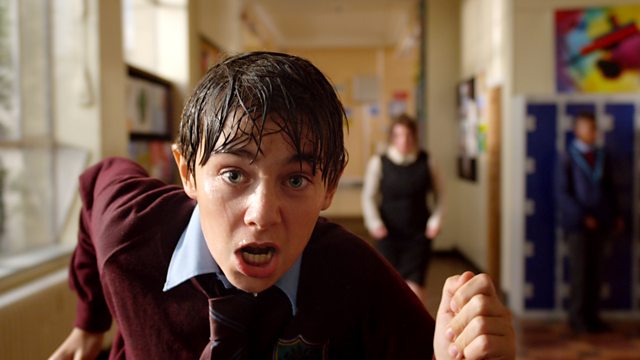
In his busy schedule, Winkler can still find time to work supporting children with dyslexia. Together with his partner Lin Oliver, he has even written a book series about his own alter-ego - a school boy with dyslexia called Hank Zipzer. 12 year-old Henry 'Hank' Zipzer is 'the world's greatest underachiever' and has many hilarious experiences at school. The series is funny, fantastic and fast moving and captures what it's like to live inside the head of a student with dyslexia. It also portrays exactly what is wrong - and right - about schooling. Hank is easily distracted but has a vivid imagination. He just experiences a blockages between his mind and the page. As he says - 'I have a lot of ideas, it's just difficult getting them down onto the page.' The irony is clear to see in the books and the TV series that now shows on BBC's children's channel CBeebies.

The school system is biased toward assessment that relies on students writing. Hank's dyslexia makes it difficult for him to complete his essay on what he did on his summer holidays, and he becomes very anxious even thinking about writing and reading. In the summer, he and his family visited Niagara Falls, so he creates a scale working model of his holiday instead, including a fully functioning waterfall. Needless to say, it all goes disastrously wrong, and as a punishment he has to read his essay out in front of the entire school. He triumphed when he gains his confidence, showing that he really can communicate - just not in the conventional way the school is expecting. The story is funny, but the message is clear -  learning can be expressed in many forms, so why can't school systems be more flexible and allow a variety of different methods of assessment?

Here's the first episode, introducing Henry and his school chums.  I bet you'll really enjoy it.

Photo by BBC Television

Creative Commons License
The world's greatest underachiever? by Steve Wheeler is licensed under a Creative Commons Attribution-NonCommercial-ShareAlike 3.0 Unported License.

All our tomorrows

It's impossible to predict the future. If I could do so, I would have been a millionaire many times over when I visited Las Vegas. Fortunately I don't gamble, so I simply sat and watched other people trying to predict what would happen next.

Most of them lost their money.

No, I'm not a prophet or a clairvoyant. And yet people keep inviting me to speak about the future of learning. Some physicists argue that the present, the past and the future are much the same thing, but they tend to obfuscate their arguments with strange words such as string theory and quantum foam. Anyway, for most of us common folk, our experience is that the past is a memory and the future is imaginary. All we have and all we experience is the present, time flows in a straight line, and it flows in only one direction.

We can look at the trends though, and we can look at the past to see what lies there. Many technologies are a lot older than we realise, and many are already on the drawing board, or in production before we see them even appearing in science fiction movies. Gesture based computing was already being developed before it featured in the movie Minority Report. The fax machine is nearly 150 years old (in 1846 it was called the telecopier). Newer technologies such as the tablet computer and mobile telephone were first conceived in the 1960s.

Sometimes these emerging ideas and technologies help us to anticipate what is coming next. Often all we need to do is look around us to see what is on the horizon. We could tell in the late 1980s that multi-media was going to be very big. And so it was. In the late 1990s, with the new millennium approaching, we could see that everything was beginning to converge on the Web.  Several years ago, I stuck my head above the parapet at a major conference and predicted that the future of learning would be focused on smart mobile technology. I was lucky to be fairly accurate with that prediction.

Today, at the Reform Symposium #RSCON5 Online Miniconference I presented a keynote entitled 'Digital Learning Futures: 3 things you should know about future learning'. I mentioned several times that our predictions of the future are often seen as ludicrous in hindsight. Where are all the flying cars and moon colonies? Predictions about the future are often so wide of the mark because we talk about the future from our limited present-time horizons.

I overheard two young school boys talking on the train a few months ago. One was saying how much he liked the new Sherlock TV series, starring Benedict Cumberbatch and Martin Freeman. The other agreed, but sagely pointed out that the 'classic Sherlock Holmes' films were far superior - the ones starring Robert Downey Jr. and Jude Law! The only way we can ever begin to think about our possible futures is to take a leap of imagination outside and beyond our current experiences. And that is a very difficult thing to do.

My talk went quite well with plenty of great questions from the audience. Soon, I am reliably informed, the full presentation will be online for people to download and watch at their leisure. In the meantime, the slides are made available below for anyone who missed my talk and would like to catch up. Ultimately, my parting comments at #RSCON5 showed that we can invent our own futures. But to do so, we need to stop thinking of the future from the perspective of our current thinking, and take some leaps of imagination into the seemingly impossible.


Photo by McKay Savage on Wikimedia Commons

Creative Commons License
All our tomorrows by Steve Wheeler is licensed under a Creative Commons Attribution-NonCommercial-ShareAlike 3.0 Unported License.

Curious learning

Curiosity killed the cat, but it also made each of us who we are today. Without curiosity, none of us would learn very much at all. Learning is based more on curiosity than any other human characteristic. Children who are curious are always interested in discovering more. Children who lose their curiosity usually turn off and tune out. Children are naturally curious, but sadly, rigid school systems and curricula have often knocked this out of them by the time they graduate.

My wife Dawn, who is a teacher in a secondary school, told me this morning that the school inspectors are always demanding evidence that children progress rapidly. She went on to add that children will only progress rapidly if they are fully engaged in their learning, and that engagement can only happen if they are really interested in the subject they are learning. She's right. All educators instinctively know that children who are engaged, are children who achieve. Having a passion for your subject is always a good thing for an educator, and it has an impact on students. But sometimes it is not enough. Other means are necessary to promote curiosity.

The trick is not to rely on new technology. That doesn't necessarily impress younger students. The solution for engaging children and sustaining their curiosity is to engineer situations where they will be challenged, surprised and yes - kept in a constant state of suspense. Sometimes it is as simple as changing the format of a lesson, or altering the layout of a classroom. Sometimes it is to introduce a new approach or problem where students need to take an alternative role. I often create chaos and uncertainty in my lessons. People are not comfortable with this, and will do anything to resolve it into something meaningful. The answer is always, always keep them guessing - and then send them out confused, if you have to.

Sometimes technology can be used to support this process of maintaining curiosity. Giving students a problem to solve is one thing. Embedding the problem into a larger project where they need to rely on each other (collaborative), and their resources (content) and their own intuition and personal qualities (creativity) to achieve their goals. The process is equally important - what they do to get to their goal should require some stamina and fortitude, and it shouldn't come easy. Some of the best learning projects I have seen have been wide ranging, open to multiple interpretations, complex and problematic, and have involved technology of some kind to support the process.

We need to engage our learners. They will only be engaged fully if they can actively participate in their learning. They won't learn if they are not curious. The responsibility for this lies with the educator. Go figure.

Photo by Steve Wheeler

Creative Commons License
Curious learning by Steve Wheeler is licensed under a Creative Commons Attribution-NonCommercial-ShareAlike 3.0 Unported License.