Tampilkan postingan dengan label games. Tampilkan semua postingan

In the flow

This is number 6 in my blog series on major learning theories. My plan is to work through the alphabet of psychologists and provide a brief overview of their theories, and how each can be applied in education. In the last post we examined the work of Craik and Lockhart on Levels of Processing theory. In this post, we explore the work of Mihály Csíkszentmihályi on Flow Theory. This is a simplified interpretation of the theory, so if you wish to learn more, please refer to the original work of the theorist.

There is an interesting news report on the BBC News website this morning. It is a piece claiming that children who use technology at home are finding that they are not able to concentrate in school. They are not able to focus, claims the report, because 'they're spending so much time on digital games or social media.' Yeah right. It's easy to blame lack of concentration on technology, but what about the quality of the lessons they are attending? The onus is on teachers to make lessons more interesting, and that is what they are trained to do. Part of the solution might be to incorporate these digital games and social media into some of the lessons. Just how can we engage students more effectively? Here's Flow Theory:

The theory

You know that moment when you are in the zone, on the ball, completely focused? You become so absorbed by what you are doing that your forget what the time is, you forget to eat, you miss sleep. That's essentially what flow is. According to Mihály Csíkszentmihályi, being in the flow is the ultimate in focused intrinsic motivation. In simplistic terms, being in the flow is where students find themselves in that narrow channel between disinterest and fear. There is a fine balance between the challenge of the task, and the skills the learner has at their disposal. Maintaining this balance avoids disillusionment if your skills don't measure up to the challenge, or boredom if the task is too simple and easy to achieve.

How it can be applied in education

Learners who are immersed in their studies tend to be single-mindedly motivated to explore their topic. Getting them to the place where they fall so in love with learning that little else matters is another matter entirely. One of the ways teachers can help students to focus more on their studies is to make learning so irresistible that there is seems to be no other option. Games and gamification may offer students the fine equilibrium between boredom and anxiety, as will other forms of immersive learning such as role play, simulation and problem solving. As long as the learning resource is designed to have the appropriate levels of challenge built into it, students will be interested. The graphic illustrates this clearly. P2 and P3 are positions that should be traversed quickly if students are to remain in the flow.

To be successful, challenge based learning requires achievable goals that require some incremental development of skills beyond the average, and where the challenge rises commensurately to match those skills (student progresses from P1 to P4). If the subject matter is made interesting and enjoyable enough, teachers won't have to work too hard to encourage students to actively engage. They will do so naturally, because they will want to rise to the challenge, and succeed because they see no other possible outcome.

Reference

Csíkszentmihályi, M. (1990) Flow: The psychology of optimal experience. London: Harper and Row.

Previous posts in this series:

Anderson ACT-R Cognitive Architecture
Argyris Double Loop Learning
Bandura Social Learning Theory
Bruner Scaffolding Theory
Craik and Lockhart Levels of Processing

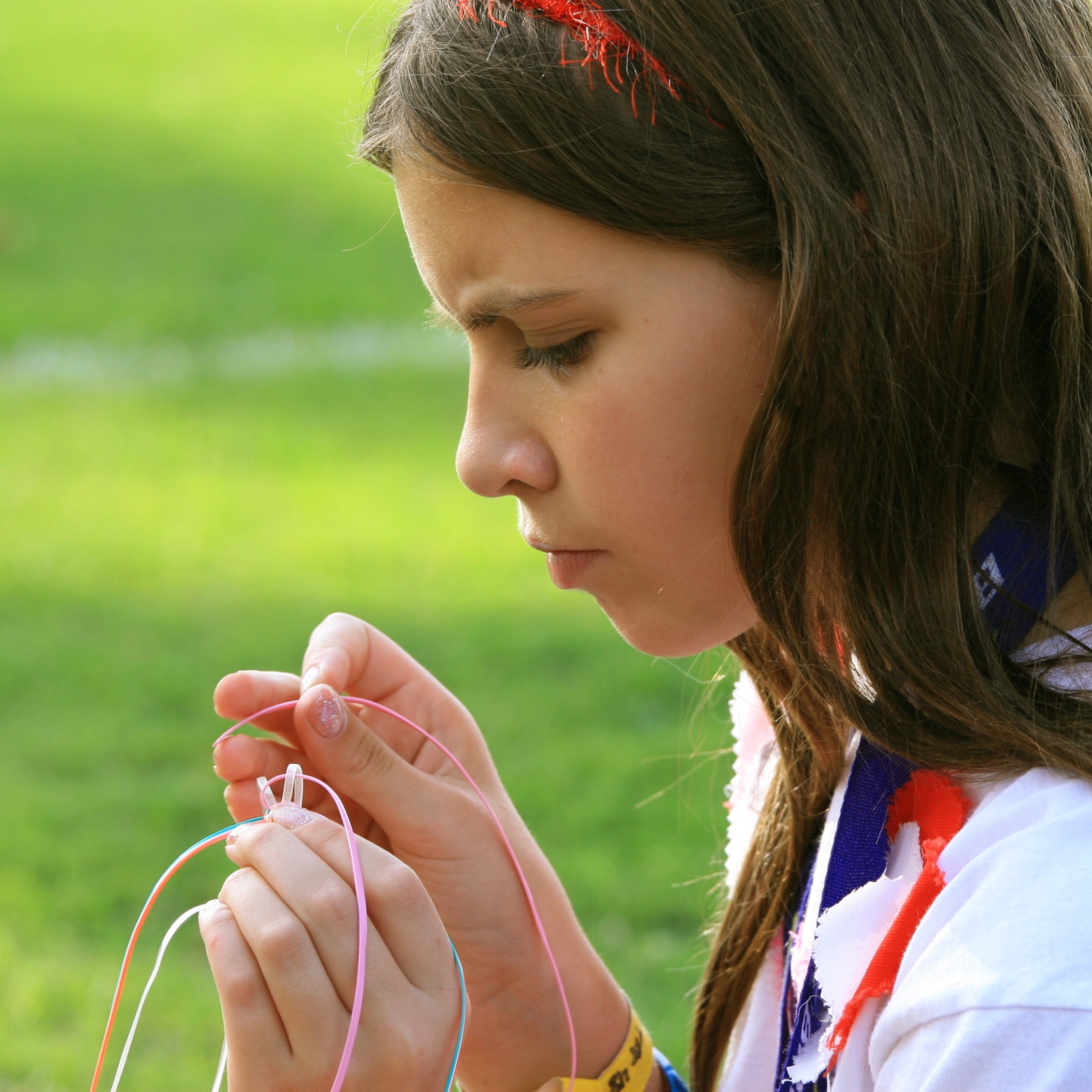
Photo by Randy on Wikimedia Commons
Graphic by Steve Wheeler

Creative Commons License
In the flow by Steve Wheeler is licensed under a Creative Commons Attribution-NonCommercial-ShareAlike 3.0 Unported License.

Taking risks

Students, when asked, are usually quite honest. What engages them in learning the most is taking risks and having fun. This was mentioned recently by a headteacher of a school in England, who argued that schools are too risk averse today, and we need to inject some excitement back into lessons. Those who can remember their school days will often remember the fun they used to have with their friends. Ask them when the fun times happened, and most of them will recollect them occurring outside of formal lesson time. Rigid standards and curricula, and a growing culture of strict health and safety in schools has militated against a lot of risk taking. 'You can't do that' has become the commonly heard phrase when someone tries to innovate.

So how can we build fun and risk taking back into the school day?

Firstly, we need to look at learning in a new light. Students make their own meaning. They are not taught. They learn - and only if they are motivated and inspired to do so. Giving students some latitude to make their own meaning by solving problems and meeting challenges is more effective than giving them the answers. Too often in the past teachers have presented answers, when they should be asking questions. Better still, get the students to ask their own questions. Kate Friedwald, a teacher in Christchurch, New Zealand believes in this, suggesting an approach that answers questions with more questions, finding out for themselves, and exploring. This is the start of enquiry based learning, and for some will develop into a lifelong interest in personal research.

Secondly, make lessons fun. Teachers can only provide so many resources, but the best fun and engagement comes when students create their own resources. This is learning by stealth. As they conceive and construct their resources and then present them, students are actually going through a process where they solve problems, investigate and learn more deeply around the topic. Varying the pace and offer of a lesson also works, as Sonia Guilana, a teacher in Spain notes. She introduces surprise elements, polling and games.

Thirdly, risk taking in a controlled environment such as school need never be hazardous. Experimenting under supervision with chemicals, light sources, language, videos, music, computers, historical events, writing styles, mathematical formulae, in fact just about anything that is in the curriculum, will offer new perspectives for students. The most important point to consider here is to ensure that the lessons are not only physically safe, but also psychologically safe. That means that students are allowed to make mistakes, and are not penalised for doing so. Some of the best learning comes from reflection on failure rather than on success. Kate Galloway, a lecturer at James Cook University in Cairns, Australia, argues that there is no real learning without some form of risk.

Finally, a word of advice from former deputy head teacher and now independent education consultant Dave Mitchell, who suggests that all teachers should imagine themselves being a student in the class. Wise words.

'The secret of change is to focus your energy not on fighting the old, but on building the new.' - Socrates

Image by Zenos Frudakis

Creative Commons License
Taking risks by Steve Wheeler is licensed under a Creative Commons Attribution-NonCommercial-ShareAlike 3.0 Unported License.